Have you ever experienced neck pain and wondered, “Is this normal? How long will it take to recover?”
Some people recover within few days, while others exeperience recurring discomfort for weeks or even months.
So, how long should neck pain actually last?
The answer depends on the underlying cause, severity of symptoms, daily activities, and how your body responds to treatment.
How Long Does Neck Pain Usually Last
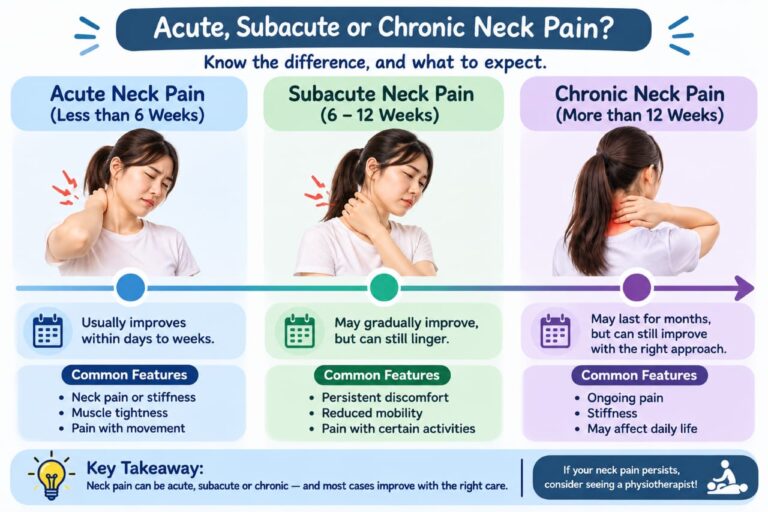
Neck pain can be classified according to how long symptoms have been present.
Acute Neck Pain (Less than 6 Weeks)
Acute neck pain often develops suddenly due to muscle strain, prolonged positioning, awkward sleeping positions, or minor injuries.
Common symptoms include:
Neck stiffnes when turning head
Muscle tightness around the neck and shoulders
Pain when looking up or down
Discomfort after prolonged sitting
Many uncomplicated episodes improve within days to a few weeks.
Subacute Neck Pain (6-12 Weeks)
When neck pain continues beyonf six weeks, it may be considered subacute.
At this stage Symptoms may gradually improve but still interfere with daily activities.
Possible contributing factors include :
Persistent muscle sensitivity
Reduced neck mobility
Poor tolerance to prolonged activities
Inadequate recovery or ongoing physical demand
Chronic Neck Pain (More Than 12 Weeks)
Neck pain lasting longer than three months is generally classified as chronic.
Contributing factors such as :
Reduced muscle endurance
Joint stiffness
Previous neck injuries
Cervical degenerative changes
Nerve irritation
Stress and poor sleep
2. Why Does Neck Pain Take Longer to Recover in Some People?
Not everyone’s recovery follows the same timeline.
Several factors can influence how quickly neck pain imroves.
Underlying Cause
– Muscle-related neck pain may improve relatively quickly, while conditions involving nerve irritation or more complex cervical problems may require longer rehabilitation.
2. Daily habits
– Spending prolonged period looking down at your phone, working at a computer or staying in one position may repeatedly aggravate symptoms.
3. Muscle strength and Endurance
– Your neck and upper back muscles help support your head during daily activities. Reduced strength or endurance may make prolonged activities more comfortable.
4. Sleep and Stress
– Poor sleep and increased stress can influence pain sensitivity and recovery.
5. Previous Neck Problems
– People who experience recurring neck pain may need a more comprehensive approach to identify the factors contributing to repetaed episodes.
3. How Do You Know Your neck Pain is Improving?
Recovery is not always measured by whether your pain has completely disappeared.
Other positive signs include:
You can turn your head more comfortably
Morning stiffness becomes less noticable
You can work or study for longer without discomfort
Headaches occur less frequently
You experience fewer episodes of pain
You can return to your usual activities with greater confidence.
Remember, improvement in function is an improtant part of recovery.