
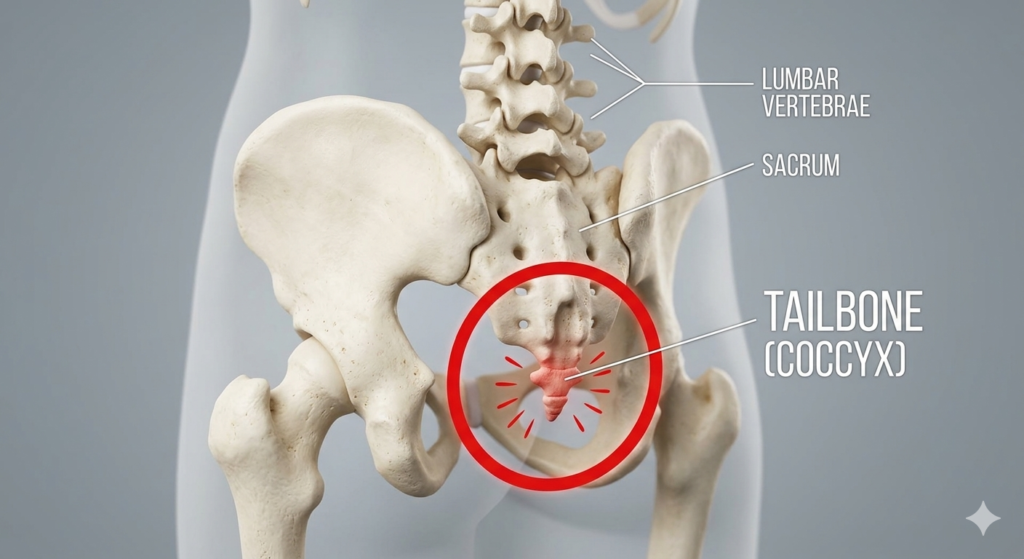
A tailbone pain is when you feel a sharp or maybe dull sensation right at the bottom tip of your spine. It usually comes when you sit down, especially for long periods of time, or maybe as you’re leaning back, seated on a chair. Often, the area is sensitive to direct touch or pressure, and the pain can sometimes be aggravated by menstruation or certain bowel movements.
Not all types of treatment would be helpful for you, it’s important to figure out the cause of your tailbone pain before you decide on what treatment you’d undergo. Or maybe you have already undergone treatment like injections and medications, but they don’t help very much. Very likely, this is because the cause of your tailbone pain is coming from the pelvic floor muscles, and could be related to your posture.
How are the Pelvic Floor Muscles related to the Tailbone?
The pelvic floor muscles are grouped together and are shaped similar to a hammock. They stretch from the pubic bone at the front of the body, to the tailbone at the back of the body. So actually, the pelvic floor muscles are directly attached to the tailbone, anchored to it, so when these muscles are tight, they will pull onto the tailbone, causing friction and tension on the tailbone, leading to pain and/or ache. Or vice versa, if something happens to the tailbone, like a fracture, the pelvic floor muscles will be pushed or pulled, in response to the dislocation of its anchor (the tailbone).

So is it a Tailbone problem or a Pelvic Floor Muscle problem?
It can be either one that starts the pain at the tailbone.
For example, the tailbone experiences a direct hit that causes a lot of pain for a few days. The pelvic floor muscles are also shocked (since they are directly attached to the tailbone), so they are also healing from the high pressure. On top of that, the pelvic floor muscles adapt to protect the tailbone, it tightens up to cushion the tailbone and to restrict the tailbone from moving too much, and they usually get tighter each day. If no special attention is brought to work on stretching and pelvic floor muscles, they remain tight and over the course of time, they start to be the main problem that causes tailbone pain. So it’s no longer the trauma from the hit that causes the tailbone pain, but instead, it’s the tight pelvic floor muscles. Hence, the cause of long-term tailbone pain might change over the course of time.
How does Posture affect the tailbone?
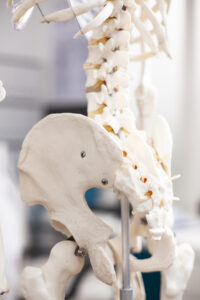
The tailbone, pelvic floor muscles, is quite sensitive to the posture of the person’s hips. The tailbone is part of the pelvic complex (hip bones + lower spine), and this bone complex is like a bowl that is secured mainly by muscles and ligaments and its alignment is at the mercy of the integrity of the muscles and ligaments. Because these muscles and ligaments can shorten and lengthen, the pelvic bowl can easily be tilted or slanted, and if not corrected, the muscles and ligaments stay as it is and the whole pelvic complex sticks to a certain postural alignment. Due to this abnormality, sooner or later, you will start to feel the effects of the muscle and postural imbalance. Some people feel the pain and ache in their knees, ankles, hips, back, some feel it in their pelvic floor and tailbone. All this due to tight and weak muscles/ligaments.
How does Sitting too much affect the tailbone pain?
During long periods of sitting, your pelvic floor muscles and tailbone acts like a shock absorber for your body.
Especially on hard surfaces, sitting compresses your tissues and muscles between the chair and your pelvic bones. This will reduce blood supply, leading to pain from lack of oxygen and also, it will compress on your nerve, which may irritate and cause a feeling of numbness or tingling sensation.
Sitting for too long may cause your pelvic floor muscles to tighten even more, because the muscles may be unconsciously clenching to protect your tailbone from the pressure, from further soreness.
Generally, instead of sitting straight up, onto our ‘sit bones’, people tend to slouch, which shifts the weight from our fleshy butt checks to our tailbone. This position puts direct impact on the tailbone, and at the same time, puts constant tension onto the ligaments surrounding the tailbone, leading to inflammation and pain.
What does a Pelvic Floor Therapist do to help?
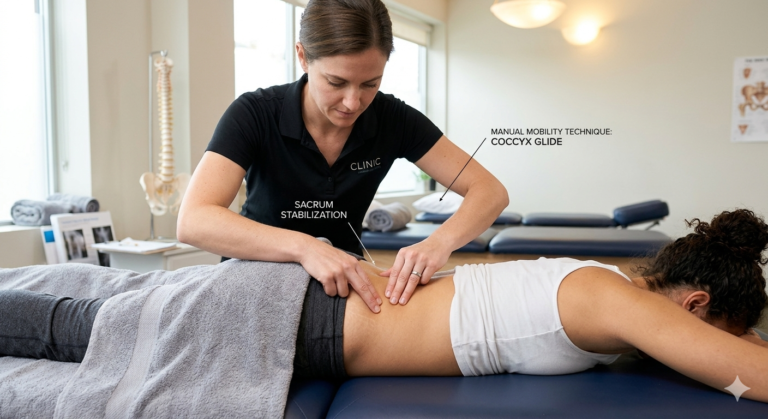
- Release PFM – Stretches will be taught, to stretch the muscles. Some therapists may apply manual therapy upon the pelvic floor muscles, helping to release the tension.
- Tailbone Mobility – Gently mobilising the tailbone is helpful to bring the tailbone back to its place and also helps to loosen any stiffness
- Postural Correction – Correcting any hip tilting by releasing or inhibiting overactive and tight muscles, while ensuring the correct muscles are strengthened and activated.
- Advice on any lifestyle adjustments – The therapist would advise you on any changes you would need to make. For example, your sitting posture, maybe you need to practice sitting more on your sit bones, rather than on the edge of your buttock. Or maybe you need to stand and walk around every 1 hour of sitting down.
It’s not normal to have a tailbone that is aching or is painful, it would be a good idea to treat it. Best check with a spine specialist or a pelvic floor specialist!
Feel free to drop us a whatsapp or call to enquire more of our Pelvic Health Services!