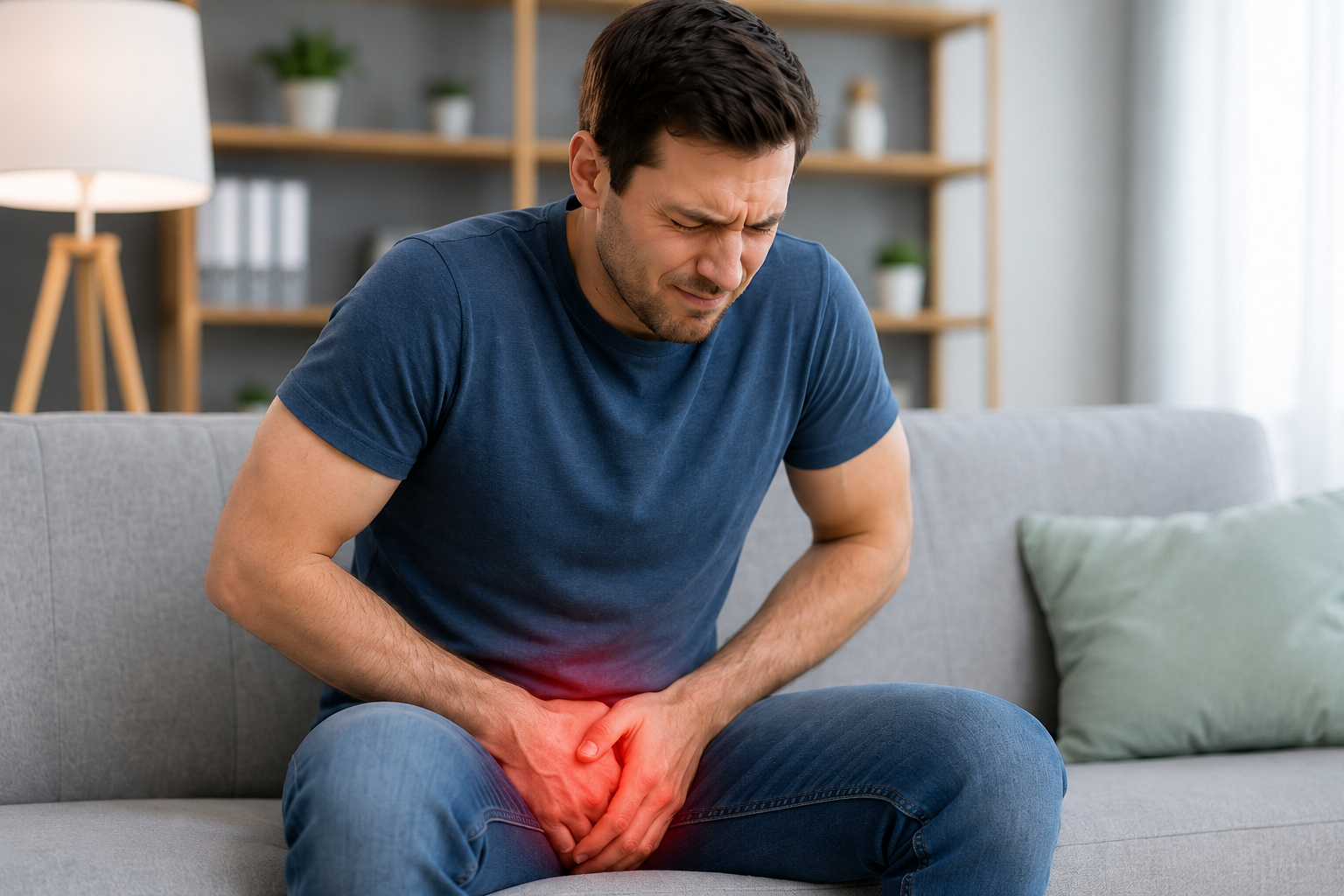
Introduction: When Your Testicular Pain Isn't Actually Coming From Your Testicles
Experiencing testicular pain can be worrying, especially when there is no obvious injury, swelling or infection.
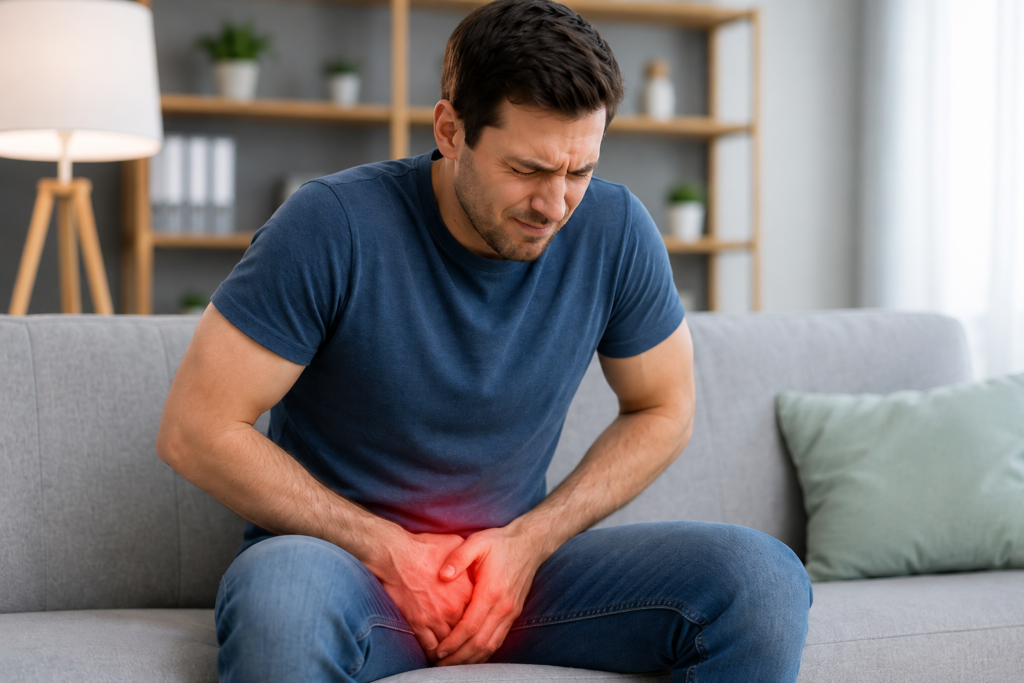
Some men describe the discomfort as a dull ache, pulling sensation, heaviness or occasional sharp pain around the testicles. Others experience pain that travels towards the groin, lower abdomen, inner thigh or even the lower back.
Interestingly, not all testicular pain originates from the testicles themselves.
In some cases, the discomfort may be referred pain from other structures, including the lower back, surrounding nerves, hips or pelvic floor muscles.
So, could your back actually be contributing to your testicular pain?
Let’s explore the possible connection.
1. Understanding Referred Pain: Why Your Back Can Cause Testicular Pain
Referred pain occurs when discomfort is felt in a different area from where the problem actually originates.
This happens because different structures in the body share overlapping nerve pathways. The nervous system may interpret irritation from one structure as pain in another region.
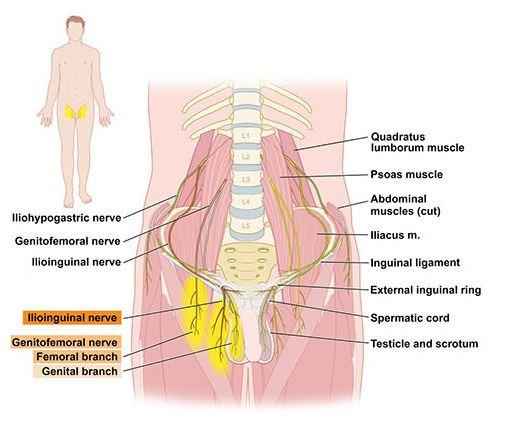
The testicles receive sensory nerve supply through several pathways, including:
The ilioinguinal nerve.
The genitofemoral nerve.
The autonomic nerve pathways associated with the testes.
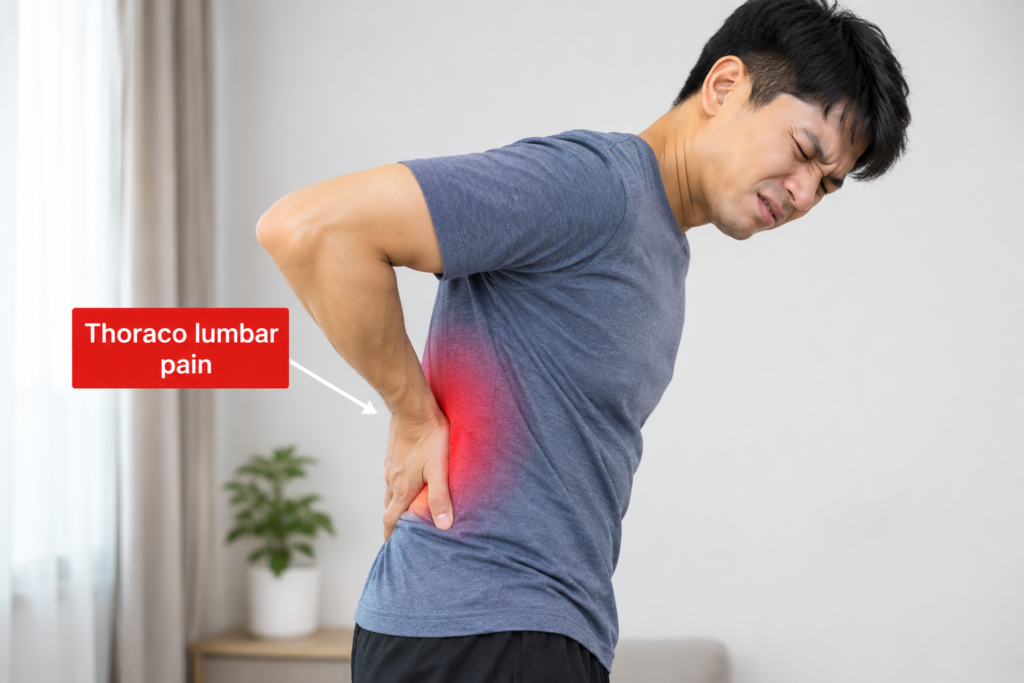
These nerves have connections with spinal segments, particularly around the thoracolumbar region (approximately T10–L2).
When certain nerves or surrounding structures become irritated, pain may be perceived around the testicle even when the testicle itself is healthy.
This is one reason why some men continue experiencing testicular discomfort despite having normal testicular ultrasound findings.
2. How Can Back Problems Contribute to Testicular Pain?
There are several possible mechanisms connecting the spine and testicular discomfort.
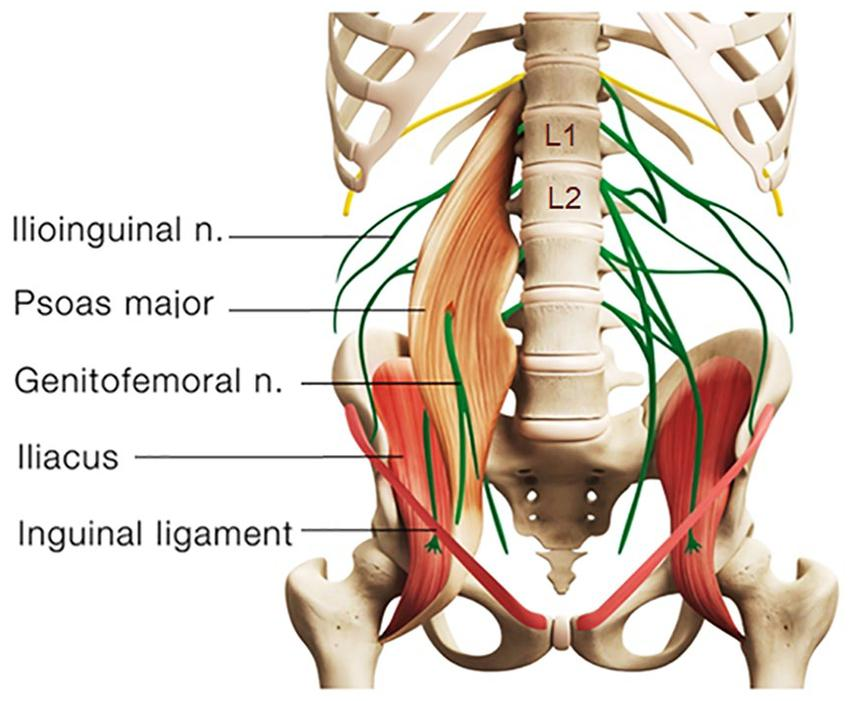
A. Nerve Irritation
Certain nerves supplying sensation to the groin and scrotal region originate from the upper lumbar and thoracolumbar spinal regions.
Irritation along these nerve pathways may contribute to referred pain around the groin or testicles.
For example, irritation involving the upper lumbar nerve roots or genitofemoral nerve may be associated with:
Testicular or groin discomfort.
Burning or tingling sensations.
Pain radiating towards the inner thigh.
Discomfort that changes with certain movements or positions.
However, not every case of testicular pain is caused by spinal nerve compression. A thorough assessment is needed to identify whether a neurological contribution is likely.
B. Thoracolumbar Junction Dysfunction
The thoracolumbar junction is the transitional region between the lower thoracic spine and upper lumbar spine.
Restricted movement, mechanical irritation or sensitivity around this region may sometimes contribute to referred pain around the groin and pelvic region.
Some men notice that their symptoms change with prolonged sitting, standing, bending or certain back movements.
This does not automatically mean there is a spinal problem, but it may be worth investigating when the testicular examination does not explain the symptoms.
C. Muscle Tension Around the Lower Back and Hips
The muscles surrounding the lower back, abdomen and hips work together to support movement and pelvic stability.
Increased muscle tension, altered movement patterns or sensitivity around these structures may contribute to discomfort around the groin and pelvic region.
This is particularly relevant in men who experience a combination of:
Lower back discomfort.
Groin or testicular pain.
Hip stiffness.
Symptoms that worsen after prolonged sitting.
Discomfort during certain physical activities.
4. How Do You Know If Your Testicular Pain Could Be Coming From Your Back?
Although symptoms alone cannot confirm the source of pain, certain patterns may provide useful clues.
You may benefit from a broader musculoskeletal and pelvic health assessment if:
-
Your testicular ultrasound and medical examination have not identified a clear cause.
-
You experience testicular pain together with lower back or hip discomfort.
-
The pain changes depending on your sitting or standing position.
-
You experience pulling, tingling or radiating sensations towards your groin or thigh.
-
Your symptoms are associated with prolonged sitting or certain movements.
-
You experience other pelvic symptoms, such as urinary difficulties or pain after ejaculation.
Remember, a normal ultrasound does not rule out every possible cause of testicular pain, including nerve-related or musculoskeletal conditions.
Persistent or recurring symptoms should still be assessed by a doctor, preferably a urologist when appropriate.

5. How Can Physiotherapy Help With Testicular Pain?
When serious testicular conditions have been excluded and a musculoskeletal or pelvic floor contribution is suspected, physiotherapy may form part of the management approach.
At Relive Physiotherapy & Rehabilitation, assessment may include:
1. Lower Back and Hip Assessment
Evaluating spinal and hip mobility, movement patterns and surrounding muscle function to identify potential contributing factors.
2. Nerve-Related Assessment
Assessing relevant neurological symptoms and nerve sensitivity to determine whether there may be a neural contribution to the discomfort.
3. Pelvic Floor Assessment
Evaluating pelvic floor muscle coordination, relaxation and tension where clinically appropriate.
4. Individualised Treatment
Depending on the assessment findings, treatment may include:
Targeted mobility exercises.
Breathing and pelvic floor relaxation techniques.
Manual therapy where indicated.
Nerve mobility exercises when appropriate.
Strengthening and movement retraining.
The goal is not simply to treat the area where you feel pain, but to identify and address the factors that may be contributing to your symptoms.
6. When Should You Seek Medical Attention?
Although some cases of testicular pain may be musculoskeletal in nature, it is important not to overlook potentially serious conditions.
Seek emergency medical attention immediately if you experience:
Sudden, severe testicular pain.
Testicular pain accompanied by nausea or vomiting.
Sudden swelling or a testicle sitting higher than usual.
Severe pain following an injury.
These symptoms may indicate testicular torsion, a medical emergency that requires immediate assessment.
Other symptoms such as fever, redness, urinary discomfort, a new lump or persistent swelling also warrant prompt medical evaluation.
Do not assume that testicular pain is caused by your back or pelvic floor before excluding important urological conditions.