
You might be having Levator Ani Syndrome. Heard of it before?
The levator ani syndrome is a type of chronic or recurrent rectal pain and particularly associated with the levator ani pelvic floor muscle group. The levator ani muscle group is a major part of the pelvic floor muscles that contributes to bowel control, pelvic stability and help support the pelvic organs.
Most commonly, you would feel a pressure or a dull ache deep in your rectum, instead of being at the skin area around the anus.
Other symptoms you may experience include:
- Pain lasting from minutes to hours
- Discomfort that worsens when sitting
- Pain or tenderness as a clinician examines your pelvic floor muscles
- Symptoms that come and go and sometimes without a specific or obvious trigger
- Constipation
- Feeling of fullness in rectum or incomplete emptying of the bowel
These symptoms individually don’t necessarily establish the diagnosis and often overlap with each other.
How do I know if it's really Levator Ani Syndrome?
You would need to visit a pelvic health professional to check and assess you. They will diagnose based on your symptoms, medical history and physical assessment results.
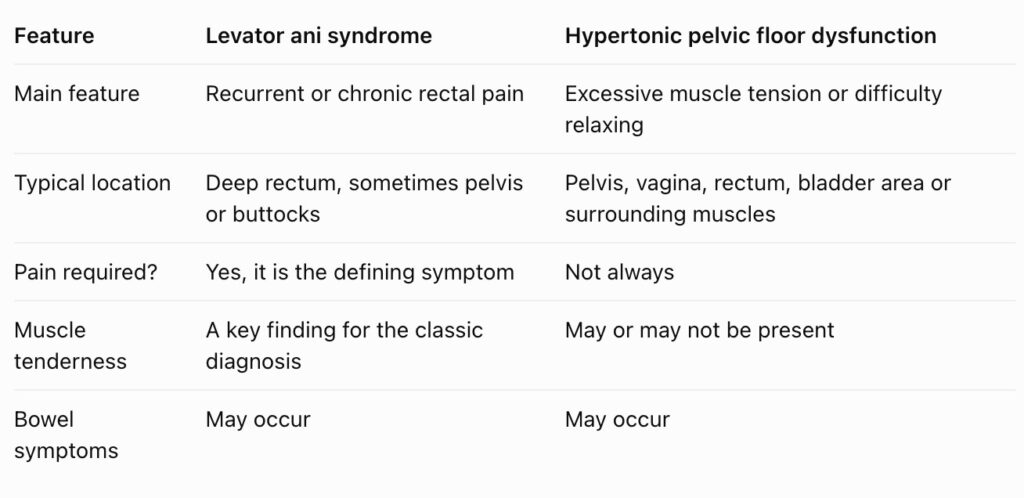
A condition that is often confused with Levator Ani Syndrome is Hypertonic Pelvic Floor Dysfunction. They overlap and have similar symptoms, but they’re not the same. Levator Ani syndrome is often considered a specific presentation of pelvic floor muscle-related pain.
Sometimes Levator Ani syndrome may be mistaken as tailbone pain as well, so a medical professional is needed to help diagnose your pain.
How will Pelvic Floor Physiotherapy help me?
The Pelvic Floor Physiotherapist will……
- Find and treat the root cause of why your levator ani muscles are affected the way they are.
- Focus on reducing the tension of the levator ani muscles.
- Teach you exercises to relax and strengthen your pelvic floor muscles
- Apply manual therapy when needed
- Advice you on how you can adapt your lifestyle and habits to improve recovery

What happens if I don’t treat my Levator Ani Syndrome?
Thankfully, it isn’t a life or death situation, and sometimes it can improve on its own, however, usually, if left untreated it will start to affect your daily activities in the longer run, and one thing to bare in mind, is that, if the pain subsides, it doesn’t necessarily mean that it has gotten better, it could mean that your body has become used to it or has adjusted to it.
Here’s a few areas that can be affected by untreated levator ani syndrome:
- Persistent or recurrent pain : Lasts for longer and comes more easily
- Difficulty with bowel movements: Constipation, feeling of incomplete emptying worsens, straining is needed to pass motion
- Reduced comfort with normal daily activities: Sitting while driving, at work or watching tv may become uncomfortable
- Sexual Experience: Pain or tightness, discomfort may develop
- Affected sleep: The pain may not be excruciating but would be enough to nag and bother you
- Emotional and Mental Load: Concentration, mood, comfort, worry and anxiety can rise.
Don’t wait or take pelvic health lightly! If you’re experiencing pain or discomfort in your rectum area, visit your pelvic health specialist.