Medically reviewed by Cheng, Relive Physiotherapy — Aman Suria, Petaling Jaya · July 2026
There’s a moment we see in the clinic almost every week. An uncle or auntie sits down, hands us an X-ray, and says it before we even ask:
“Doctor say my knee already bone-to-bone. Sooner or later kena change knee, right?”
You can hear it in their voice. Half scared, half already given up. Somebody — a neighbour, a relative, a WhatsApp forward — has told them that osteoarthritis is a one-way road, and the road ends at the operating theatre.
Here’s the honest, evidence-based truth we tell every one of them: for most people, that’s simply not how it goes. Knee osteoarthritis is common, it’s manageable, and surgery is the last stop — not the only stop. Let’s clear up the myth properly.
First, how common is this really?
Very. If you’re Malaysian and over 55, look around your kopitiam table — statistically, one in three people your age has knee pain, and one in four has actual osteoarthritis symptoms. It’s not a rare disease. It’s one of the most common conditions we treat at Relive.
So if your knee aches going down stairs, or stiffens up after sitting through a long makan, you’re in very ordinary company. That’s the first thing to understand: you’re not broken, and you’re not alone.
The myth: “Bone-to-bone means straight to surgery”
This is the belief that does the most damage — not to the knee, but to what people do about it.
Here’s what the research actually shows. When people with hip and knee osteoarthritis go through a structured exercise-and-education program first, roughly 7 out of 10 with advanced arthritis were able to delay surgery by at least two years — and many avoided it altogether. Not a small study either: this comes from a registry of tens of thousands of patients across several countries.
The results are consistent: around a third less pain, a third better function, less reliance on painkillers, and a lower likelihood of needing surgery. From exercise. Not injections. Not surgery. Movement, done properly and guided.
There’s a detail here Malaysians especially need to hear: heavier patients responded to exercise therapy just as well as lighter ones. So “I’m too heavy for this to work” is not a reason to skip it. It’s a reason to start.
Why movement helps a joint that’s “worn out”
This is where the old thinking gets it wrong. People picture the knee like a car tyre — worn down, no tread left, nothing to do but replace it.
But a joint isn’t a tyre. It’s living tissue, and it responds to load the way muscle responds to exercise — it adapts. The muscles around your knee (your thigh, your hamstring, your calf) work like the guy ropes on a tent. Strong ropes hold the joint steady and share the load. Weak ropes hand all that load straight to the sore joint.
And the load is real: going down stairs, your knees take three to four times your bodyweight per step. Strong muscles absorb that. Weak muscles let the joint take the full hit. That’s why strengthening — not resting, not avoiding — is the foundation of every serious guideline for knee OA worldwide.
So when IS surgery the right answer?
We’re not anti-surgery. Knee replacement is a genuinely good operation for the right person at the right time. We’ll be the first to refer you if you’re there.
But “the right time” usually looks like this: you’ve given proper, guided exercise therapy a real go for several months, your pain is still severe, it’s stopping you sleeping or walking, and your quality of life is badly affected. Then surgery is a sensible conversation.
What we don’t want is for you to skip straight from an X-ray to the surgeon without ever trying the thing that helps 7 in 10 people — because once you understand that, the whole picture changes from “when do I get cut” to “how do I get strong.”
When to come and see us
Come in if:
- You’ve been told you have knee OA and nobody has actually shown you what to do about it
- Your knee pain has lasted more than 2–3 weeks and isn’t improving
- You’re being pushed toward surgery and want to know if you have other options first
- The pain is affecting your sleep, your work, or your daily life
There’s no need to just tahan and wait for it to get bad enough for surgery. The earlier you start, the more options you have.
Come see us at Relive Physio
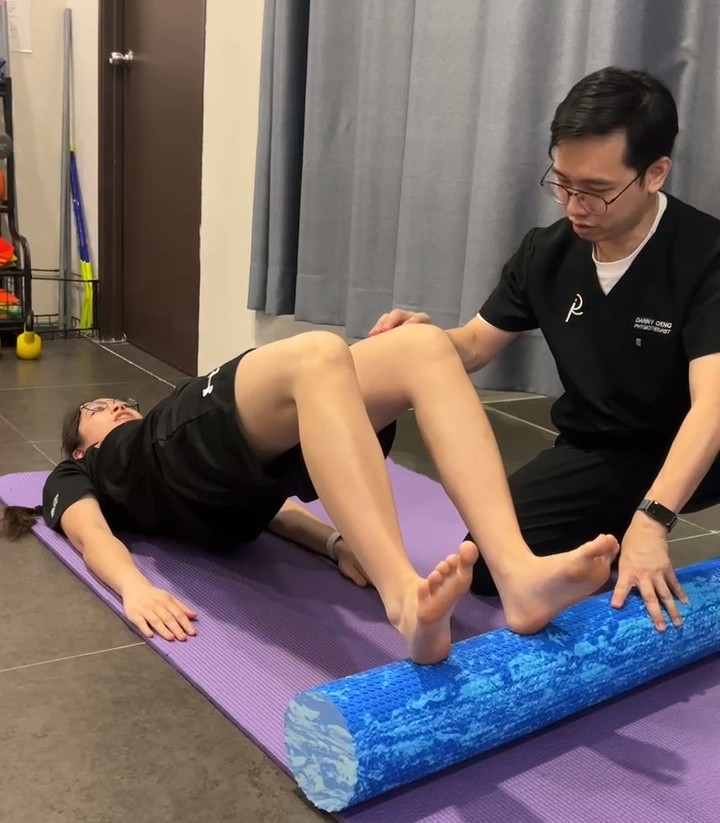
At Relive Physiotherapy in Aman Suria, Petaling Jaya, we help people across the Klang Valley take control of knee osteoarthritis — with a proper assessment and a plan built around your knee and your life, not a generic printout.
If someone told you a knee replacement is your only option, come and get a second opinion first. WhatsApp us [insert clinic WhatsApp link] and tell us what’s going on.
Frequently Asked Questions
Can physiotherapy really help osteoarthritis, or does it just delay the inevitable? It genuinely helps. Large international studies show structured exercise and education reduce pain and improve function for most people with knee OA, and allow around 7 in 10 people with advanced arthritis to delay or avoid surgery. It treats the problem — it doesn’t just postpone it.
My X-ray says bone-to-bone. Isn’t it too late for exercise? No. X-ray severity doesn’t decide your outcome as much as people think. Research found even people with significant arthritis, and heavier patients, improved with proper exercise therapy. It’s rarely too late to get stronger.
Won’t exercising a painful knee make the damage worse? Done correctly, no — this is one of the biggest myths. Guided strengthening protects the joint by sharing the load across your muscles. The key word is guided: the right exercises, at the right level, progressed safely. That’s what a physio is for.
How long before I feel a difference? Most people notice meaningful improvement in pain and function within about 8 to 12 weeks of consistent, guided exercise. Consistency matters more than intensity.
Where can I get physiotherapy for knee osteoarthritis in Petaling Jaya? Relive Physiotherapy is in Aman Suria, Petaling Jaya, and we treat knee osteoarthritis for patients across PJ and the Klang Valley. WhatsApp us to book an assessment and get a plan built around your knee.