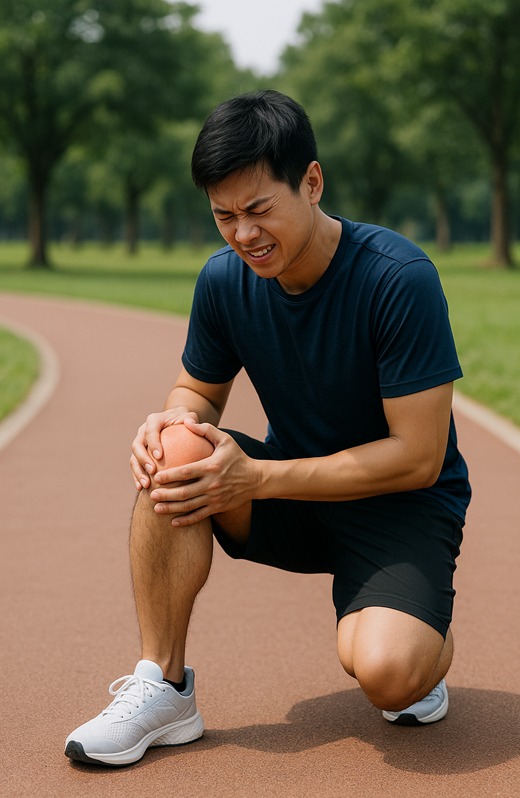
Learn why knee pain (“sakit lutut”) is so common among Malaysians, the key risk factors, and how physiotherapy at Relive Physio can help you stay active without pain.
Relive Physiotherapist focus on treating the root cause of knee pain.
Why Knee Pain Is So Common in Malaysia?
Knee pain isn’t just an “aging problem.” In Malaysia, it affects people from teenagers to retirees — from badminton enthusiasts to office workers. At Relive Physio, we often see clients who’ve had months of knee discomfort before seeking help. The good news? Most knee pain can be reduced — or even prevented — with the right understanding and habits.
1. Lifestyle & Cultural Habits
Floor-sitting habits can increase knee joint pressure if muscles are weak.
Many Malaysians spend long hours sitting cross-legged or squatting — during prayers, meals, or cleaning. These deep-knee positions place high pressure on the kneecap and cartilage, especially without proper strength support.
Tip: If you often sit or squat, balance it with hip and quadriceps strengthening and avoid staying in the same posture too long.
2. Body Weight & Joint Load
Every kilogram of body weight multiplies pressure through the knee joints.
Extra body weight adds significant stress to your knees. Every extra 1 kg on your body can translate to 3–4 kg of force through the knee with each step. Over time, that accelerates cartilage wear and leads to early osteoarthritis.
Physio reasoning: Our knees act like shock absorbers. If the load is too high for too long, the system wears out faster than it can recover.
3. Muscle Weakness & Imbalance
Knee pain often starts from weak hip and thigh muscles, not the joint itself.
Weak quadriceps, glutes, or core muscles cause the knees to work overtime. This imbalance leads to patellofemoral pain or IT band irritation. Strengthening isn’t only about the knee itself — it’s about restoring coordination between the hip, core, and leg.
4. Poor Footwear or Surface
Hard floors and thin slippers increase impact on your knees.
Many patients develop knee pain from walking on hard tiles or uneven pavements with thin shoes or worn-out slippers. Proper footwear with cushioning and arch support distributes forces more evenly.
5. Past Injuries Left Untreated
Old injuries can cause compensation patterns that overload the opposite knee.
Old injuries — even minor sprains — can cause compensations. The body “protects” one leg, causing overload on the other. A detailed movement assessment helps detect this early.
Prevention Tips You Can Start Today
Strengthen your thighs and hips 2–3 times per week.
Move regularly — avoid long sitting hours.
Control body weight through diet & activity.
Use proper footwear for your daily routine.
Seek physio early — don’t wait for pain to “become serious.”
Final Thoughts from Relive Physio
Knee pain doesn’t appear overnight. It’s usually a signal of imbalance — too much load, too little strength, or repeated stress. At Relive Physiotherapy (Aman Suria, PJ), we focus on finding the root cause, not just reducing pain. Through guided exercises, manual therapy, and education, you can regain strength and confidence to move freely again.