5 May 2026 · By Danny Cheng, Relive Physiotherapy · Aman Suria, PJ
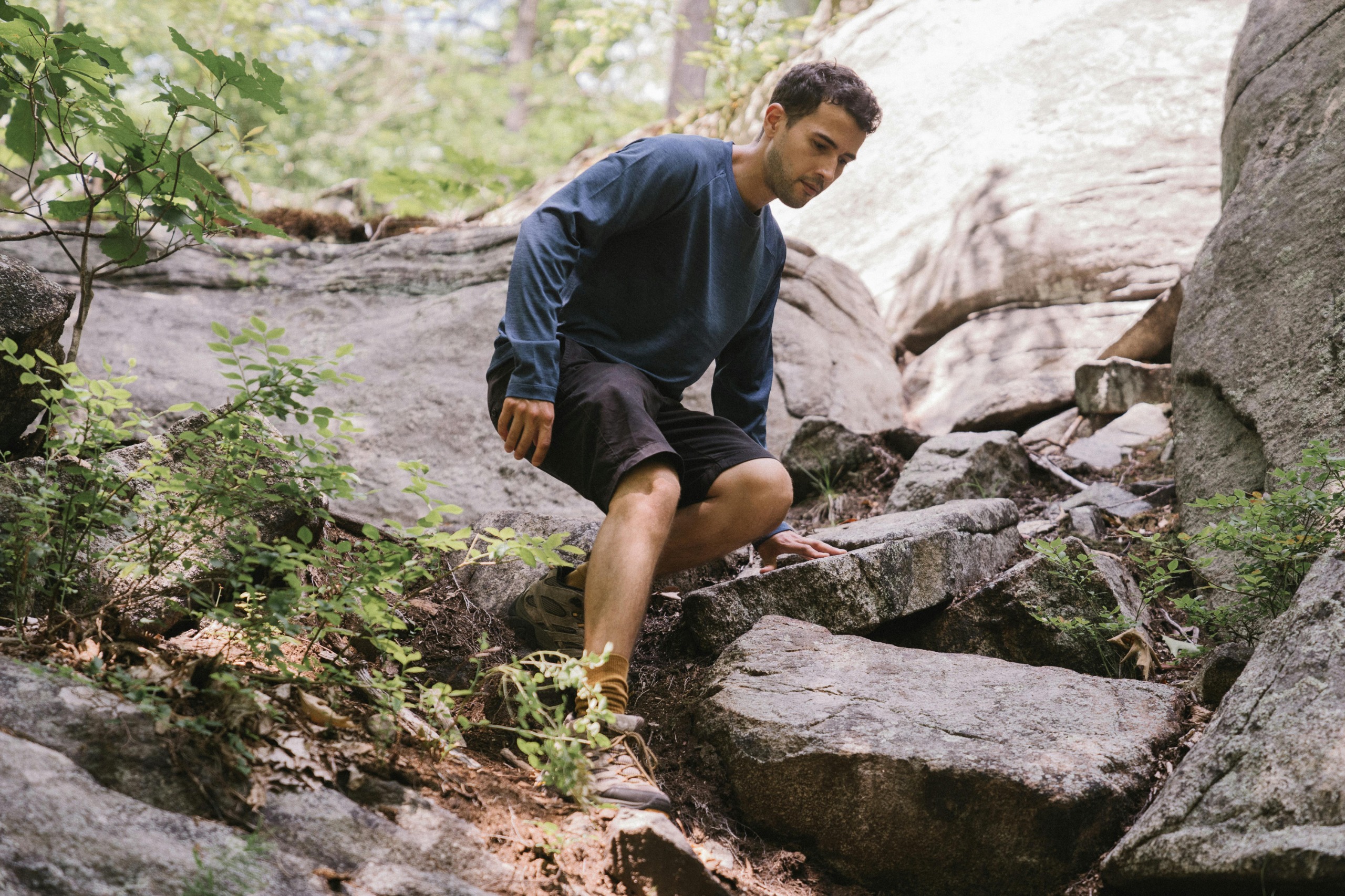
Every Monday after a long weekend, at least a few patients walk into Relive with classic hiking knee pain — going up was fine, going down was the problem. Sharp pain behind the kneecap, usually kicks in about 20 minutes into the descent, sometimes bad enough that they’re walking sideways just to manage it.
If that sounds familiar, here’s what’s actually happening — and three things you can do about it before your next hike.
The Descent Is Doing The Real Damage
Going uphill, your muscles push against gravity — hard on the lungs, but actually quite gentle on the joints. Coming downhill is a different story. Your quads now have to act as brakes, absorbing your full body weight on every step down. The force going through your kneecap can reach 3 to 4 times your bodyweight. Do that for an hour on the way down from Broga after your legs are already tired — and it’s no surprise something starts screaming.
“But why does it feel fine going up and only hurts going down?”
That question is actually the key to fixing it.
Honestly? It’s Usually Not Your Knee
This is the part most people miss. When we assess patients at Relive with hiking knee pain, the knee is usually the victim, not the problem. What we almost always find is that the outer hip muscles — your gluteus medius — are not doing their job properly.
Those muscles are supposed to act like a steering wheel, keeping your knee tracking straight every time you step down. But if you’ve been sitting at a desk all week (very Malaysian problem, right), those muscles are basically asleep by Saturday morning. So when you’re on the descent, your knee drops inward slightly with every step. Repeat that a few hundred times down Bukit Gasing and you’ve got serious irritation building behind the kneecap.
Rubbing Yoko Yoko and resting on Tuesday helps the ache. It doesn’t fix the steering. That’s why it comes back every single weekend.
3 Things To Do Before And During Your Next Hike
- Wake up your glutes before you start the descent
Do this at the top of the hill — takes 60 seconds
- Find a tree or railing and hold it lightly for balance
- Stand tall — don’t lean your body sideways
- Lift one leg directly out to the side, slow and controlled. Not forward, not back — directly sideways
- Do 15 reps until you feel a burn in your outer buttock, then switch sides
Why this works:
You’re “switching on” the hip stabilisers before they’re needed on the descent. Most patients who do this consistently tell us the knee pain is noticeably better within two or three hikes. It’s not magic — it’s just your muscles actually doing their job for once.
2. Walk the slope in a zig-zag, not straight down
Looks funny, saves your knees
Most people walk straight down the slope because that’s the obvious, fast route. But that line forces your knee to bend deeply under load — which is exactly the combination that grinds your kneecap. Here’s a better way:
- Instead of pointing yourself straight downhill, angle your body about 45 degrees to the slope
- Walk diagonally across the trail — like a slow ski turn — then switch direction
- Keep your steps shorter than usual. Bigger steps = deeper knee bend = more load
- On really steep sections, turn your whole body sideways and step down like you’re coming off a ladder
Why this works: You cover more distance, yes — but each step now requires less knee bend and shifts the braking load toward your hips and ankles, which can handle it much better. Think of it like going down a steep carpark ramp — you’d naturally angle your car, not drive straight down. Same logic applies to your body.
3. Use trekking poles — they’re not just for the uncles and aunties
Borrow a pair first before you buy
A lot of younger hikers skip the poles because it looks overly cautious. But poles are honestly just good mechanics — they distribute the load from your legs into your arms and shoulders, which are much better equipped to handle it on a descent.
- Plant both poles before you step down — not after. The timing matters
- Push your weight into your hands first, then let your foot land softly
- Keep your elbows slightly bent. Locked straight arms lose the shock-absorbing benefit
- Shorten the pole length slightly going downhill so you’re not reaching too far forward
Why this works: Studies show poles reduce the load through your knees by around 20–25% on steep descents. If your kneecap is already irritated, that reduction alone can be the difference between finishing the hike comfortably and limping to the car. Plus — if you’re planning Kinabalu one day, you’ll need them anyway. Might as well get used to it now.
When To Actually Come In?
If the three tips above help — great, keep doing them. But if your knee pain is happening every single hike and not settling by midweek, or if it’s starting to bother you going down everyday stairs, that’s worth a proper look. Not because it’s necessarily serious, but because a movement assessment usually shows very clearly why it keeps coming back — and what specifically to fix. That’s a lot more useful than repeating the same rest-and-Yoko-Yoko cycle every week.
At Relive Physio in Aman Suria, we look at the full picture — hip control, knee alignment, how your whole leg is loading — so you can hike without your knee absorbing everything.
Ready to hike pain-free? Let’s fix the root cause.
Quick Answers
Q: Why does my knee hurt going downhill but not uphill?
A: Downhill walking forces your quads to act as brakes, placing 3–4× your bodyweight through the kneecap on every step. Uphill uses a different type of muscle contraction that is much gentler on the joint.
Q: Should I stop hiking if I have knee pain walking downhill?
A: Not necessarily. The goal is to fix the movement pattern — usually hip muscle weakness — causing the problem. With the right approach, most people can continue hiking without further damage.
Q: What exercises help with knee pain when walking downstairs or downhill?
A: Hip abductions, lateral band walks, and eccentric step-downs are most commonly prescribed for hiking knee pain. A physiotherapy assessment will identify which weakness is the main driver for your specific pattern.
Q: Where can I get physiotherapy for hiking knee pain in Petaling Jaya?
A: Relive Physiotherapy & Rehabilitation in Aman Suria, Petaling Jaya offers knee and movement assessments that look at hip control, knee alignment, and ankle mechanics. WhatsApp us to book a slot.