1 September 2026 · By Cheng, Relive Physiotherapy · Aman Suria, Petaling Jaya
Have you ever noticed this?
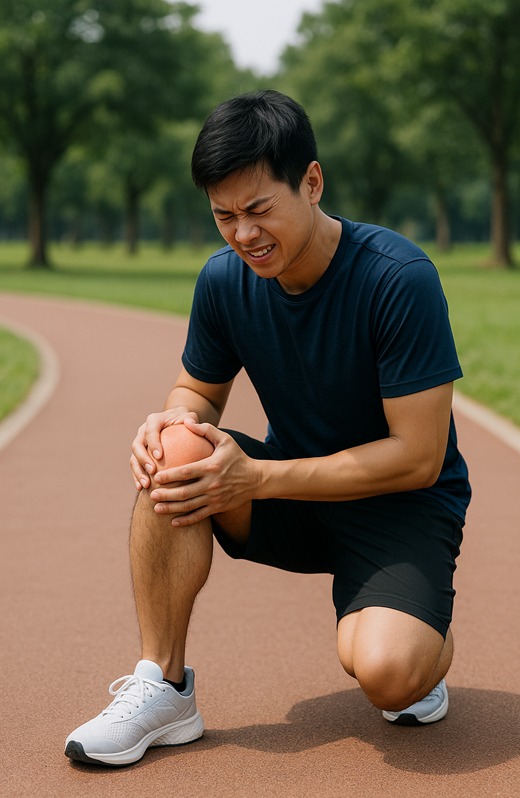
Walking around the office or shopping mall feels completely fine. But once you climb the stairs at the LRT station, squat down at the pasar, get up from a low chair, or go into sujud during prayer — suddenly the knee starts to hurt.
This kind of knee pain on stairs or during squatting is something we see quite often at Relive Physio.
One common reason is simple: the more your knee bends, the harder the muscles around your knee have to work, and the more load goes through the kneecap area.
That does not automatically mean something is badly damaged. But it can explain why normal walking feels okay while stairs and squatting are uncomfortable.
Why Does Knee Pain on Stairs and Squatting Happen?
Your kneecap sits in a groove at the front of your thigh bone. When you bend and straighten your knee, the kneecap moves along this groove. The deeper the bend, the harder your thigh muscles have to work.
That is why climbing stairs, doing a deep squat, or getting up from a low chair can feel much harder than walking on flat ground. The force around the kneecap during stair climbing can reach roughly three times your body weight.
Sounds scary, but our knees are designed to handle load. The problem is usually when the knee is currently sensitive, irritated, weak, or simply not used to that amount of work.
Does This Mean Something Is Damaged?
Not necessarily. Pain during stairs or squatting can happen for different reasons. The kneecap area is one common source, but arthritis, tendon irritation, previous injuries and other knee problems can also feel similar.
That is why we should not guess the diagnosis based on one painful movement alone. The important thing is to understand what is making your knee sensitive and what your leg needs to handle that movement better.
3 Things You Can Try
- Make the stairs easier for now
If stairs are painful, you do not have to force yourself to move exactly the same way as usual.
Try these simple changes:
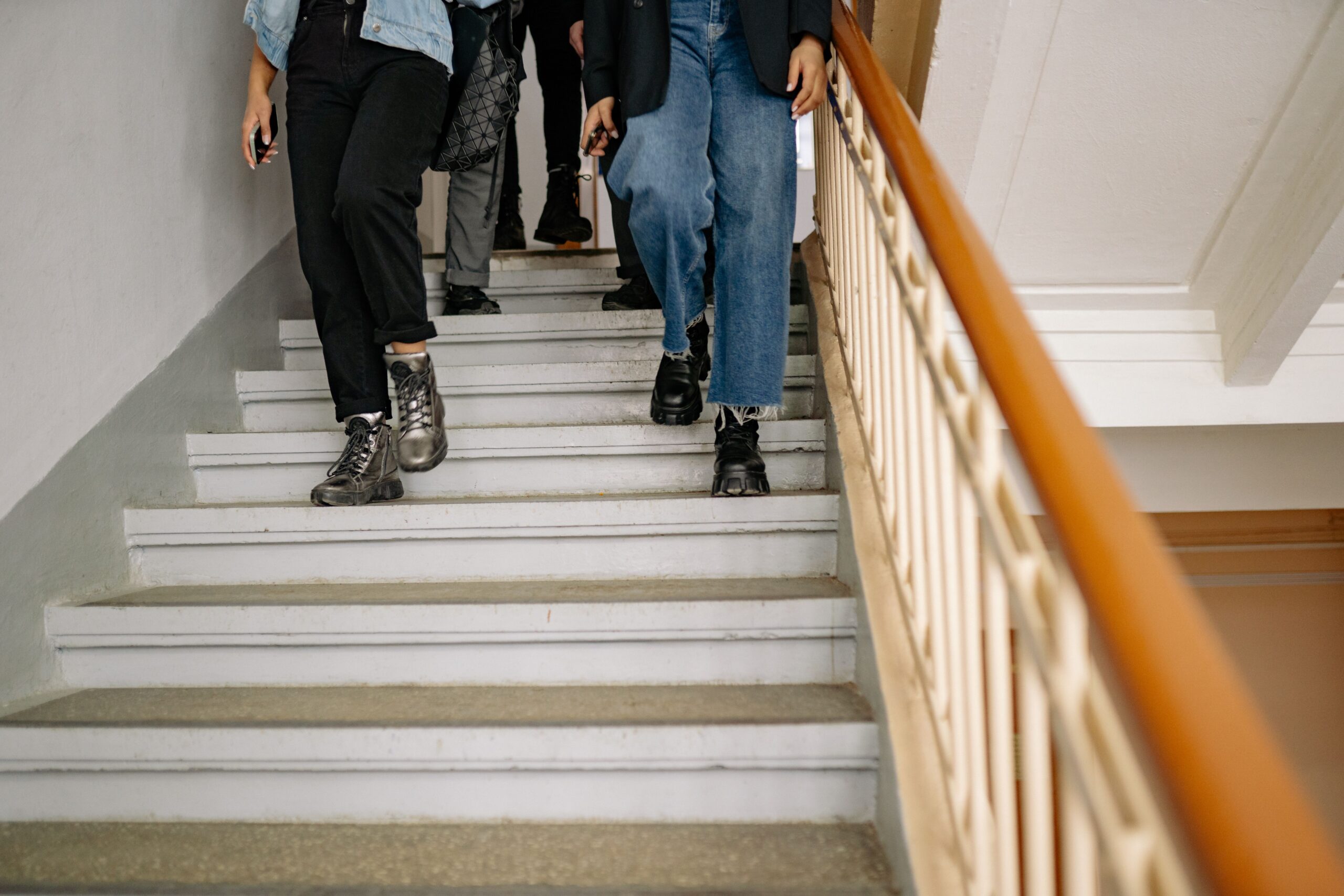
- Use the handrail if there is one. It gives you extra support and reduces how much work the painful knee has to do.
- If one knee is more painful and you need to take one step at a time: going up, start with the stronger or less painful leg. Going down, put the more painful leg down first, then bring the stronger leg onto the same step.
- Take one step at a time rather than rushing.
- If your knee is having a particularly bad day, using the lift or escalator is okay. You are simply reducing the load temporarily while the knee settles.
Why this helps:
These small changes reduce how much work the painful knee has to do on each step, while still allowing you to keep moving.
2. Don’t force a deep squat
Squatting is part of daily life for many people — for example getting something from a low shelf, using a low toilet, doing house chores, or getting up from a low chair.
Try these simple changes:
- Hold onto something stable like a chair, table, railing or countertop for extra support.
- Do a smaller squat instead of forcing yourself all the way down. Even a half squat is fine.
- Keep your feet slightly wider and push your hips back as if you are sitting onto a stool.
- If you need to do something near the floor, consider using a low stool or going down onto one knee instead of forcing a deep squat.
- If the movement is painful today, reduce the depth first and build it back gradually later.
Why this helps:
The deeper the squat, the more load goes through the front of the knee. Reducing the depth and using support can make the movement much more manageable.

3. Build your strength back up gradually
The long-term goal is not to avoid stairs or squatting forever. Usually, your knee needs to get stronger and more confident with these movements again.
A few simple exercises often help:
- Sit to stand from a chair — 8 to 12 reps
- Mini squat while holding support — 8 to 12 reps
- Low step-up onto the first stair or a small step — 6 to 10 reps each side
- Do them 2 to 3 times per week, starting at a level that feels manageable
A useful guide:
A bit of mild discomfort during exercise can be okay, but if the pain becomes sharp, severe, or stays much worse later that day or the next day, reduce the depth, reps or step height.
Why this helps:
When your thigh, hip and calf muscles get stronger, your knee usually handles stairs, squatting and getting up from a chair much better.

When Should You Get Your Knee Checked?
If your knee only aches occasionally after a very busy day and settles quickly, you may simply need a little rest, some pacing and gradual strengthening.
But consider getting it assessed if the pain keeps happening for a few weeks, stairs are becoming something you avoid, or it is starting to affect normal activities such as prayer, getting out of a chair, squatting or doing housework.
You should also get it checked sooner if there is significant swelling, the knee keeps giving way or locking, or you cannot put weight through the leg after an injury.
At Relive Physiotherapy in Aman Suria, Petaling Jaya, we assess your knee strength, movement and daily activities to understand what may be contributing to the problem and how to gradually get you moving comfortably again.
Having trouble with stairs or squatting? WhatsApp Relive Physio to arrange an assessment.
Quick Answers
Q: Why does my knee hurt on stairs but not when walking?
A: Stairs require more knee bending and more work from the muscles around the knee. This increases the load around the kneecap compared with normal flat-ground walking.
Q: Does knee pain on stairs mean I have arthritis?
A: Not necessarily. Arthritis is one possible cause, especially as we get older, but pain during stairs can also come from the kneecap area, tendons, previous injuries or other knee problems. An assessment can help identify the likely cause.
Q: Is squatting bad for my knees?
A: No. Squatting is a normal movement. But a deep squat needs more knee bend and more muscle effort, so reducing the depth temporarily may help if your knee is currently painful.
Q: What exercises can help knee pain when using stairs?
A: Exercises such as sit-to-stand, mini squats and controlled step-ups can help build strength and improve how well the knee tolerates stairs and squatting. The best starting level depends on your symptoms and current ability.
Q: Where can I get physiotherapy for knee pain in Petaling Jaya?
A: Relive Physiotherapy in Aman Suria, Petaling Jaya provides physiotherapy assessment and rehabilitation for knee pain, including problems with stairs, squatting, walking and other daily activities.